
It is easy to find reasons to worry about the Australian share market at the moment. House prices are falling, further rate hikes are expected, inflation is too high and our government debt continues to grow. Throw in that the All Ordinaries Accumulation Index is not too far off its all time highs and that the government is going to tax you more on any money you do make, why wouldn’t you take some money off the table?
Don’t ask that question to a fund manager, obviously. But let me give you a few things to think about before you run out and hit the sell button.
The Australian consumer is ready for the downturn
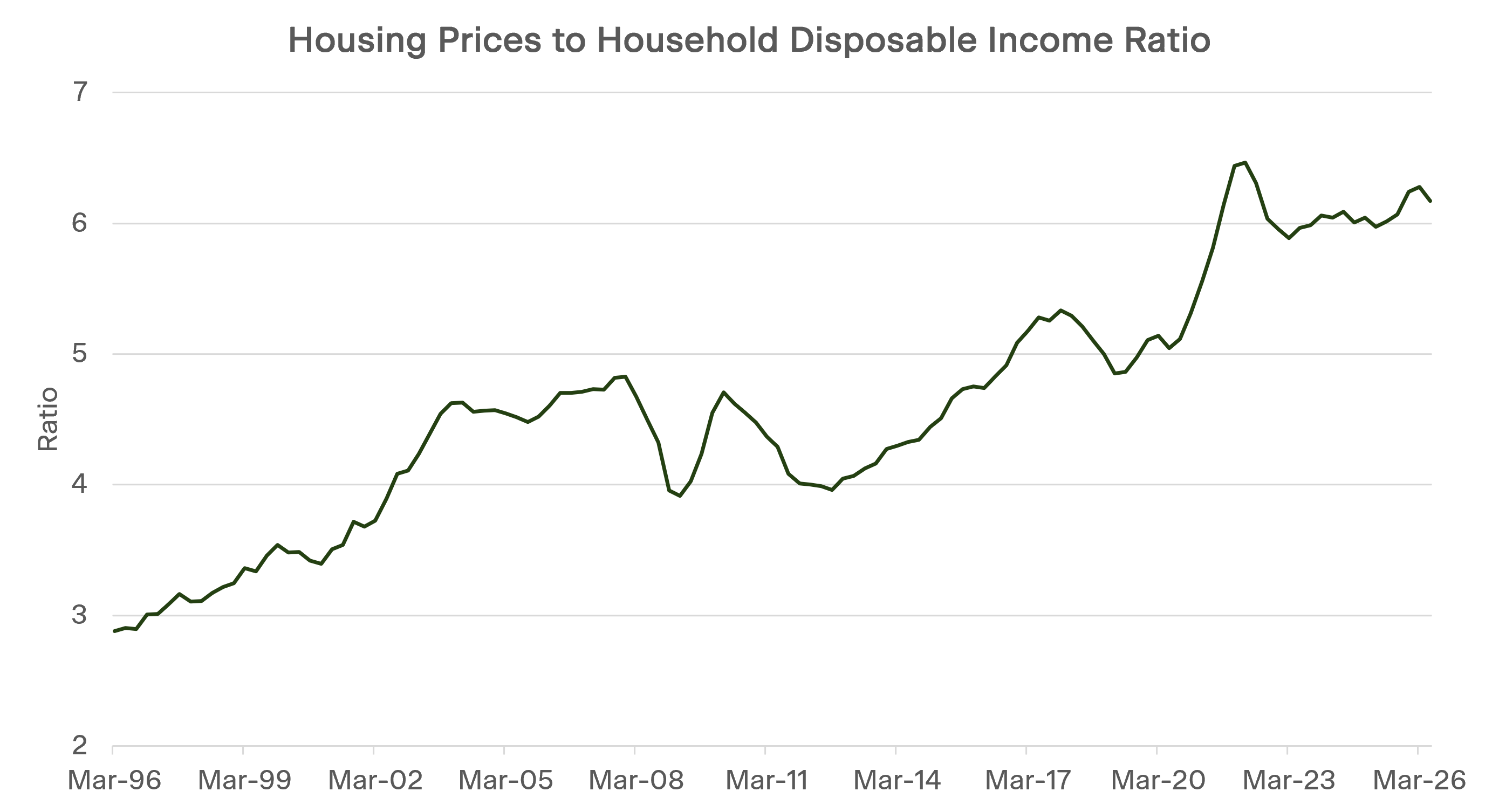
Housing is usually the first place Australians look when they are worried about the economy. The Reserve Bank's latest chart pack shows just how expensive Australian housing has become relative to household incomes.
Source: RBA
*Household disposable income is after tax, before the deduction of interest payments, and includes income of unincorporated enterprises
Raise interest rates four times, threaten another two increases, change the tax system to discourage investors and it’s hardly surprising house prices have already fallen. They should probably fall further.
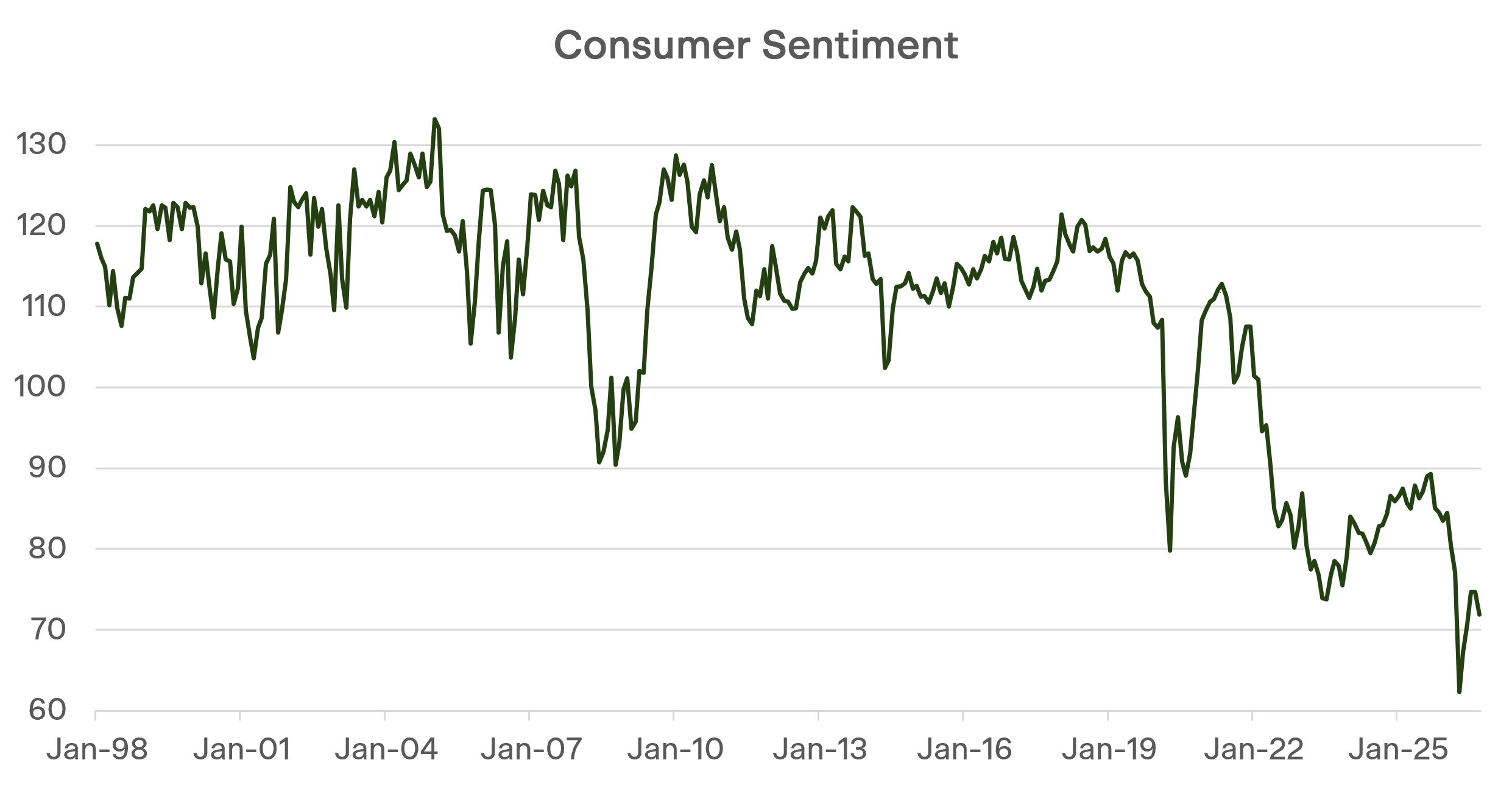
While a small number of ASX-listed companies are directly exposed to residential property prices, the primary concern here is the impact of a housing slump on the wider economy. Residential property represents an enormous part of household wealth and mortgage repayments have risen considerably over recent years. Consumer sentiment is near all time lows.
Source: ANZ-Roy Morgan
All true. Yet I’m not sure that translates to woeful stock market performance from here. That’s because Australian consumers have been preparing for tough times for a long time.
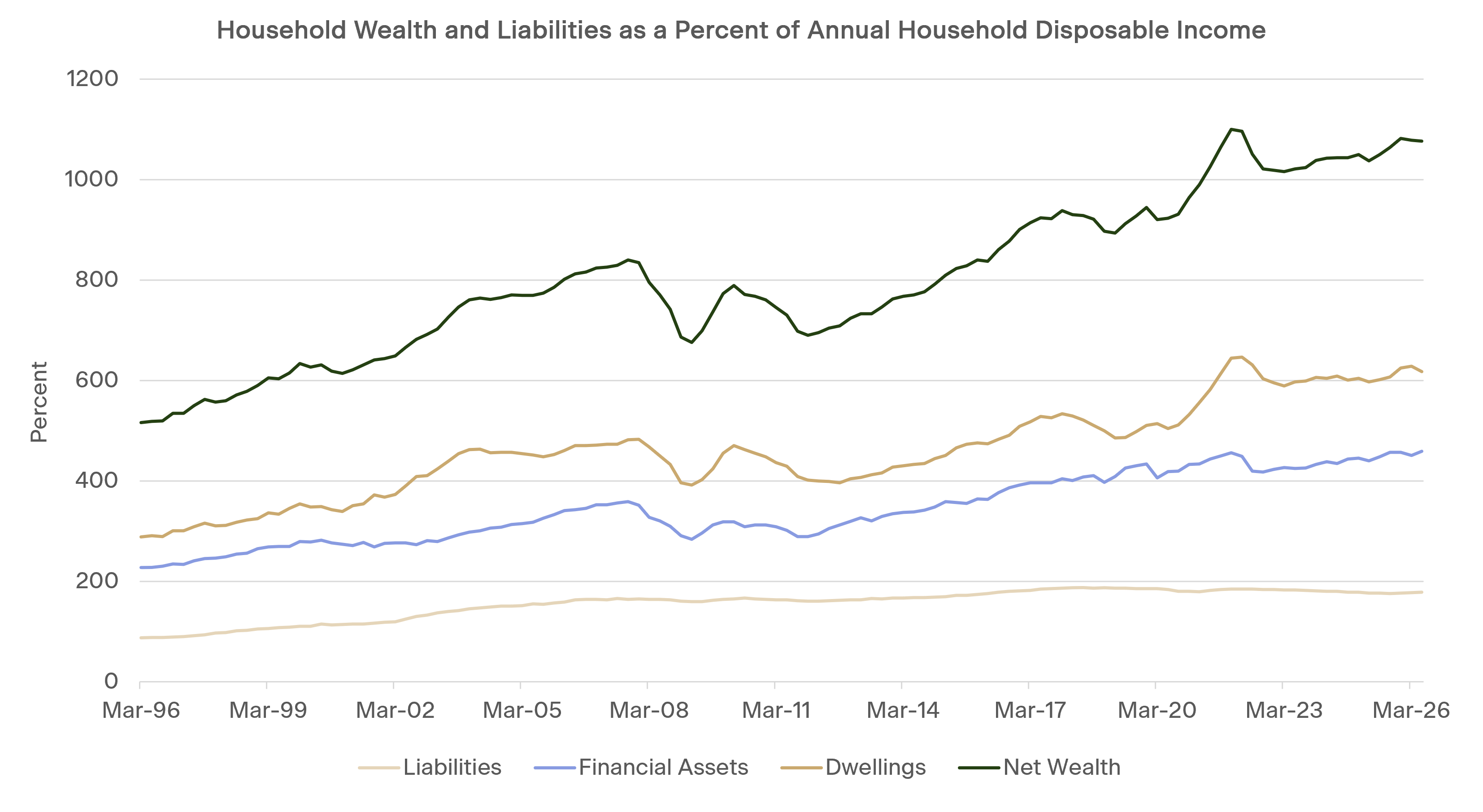
The growth in household wealth over the past decade hasn’t translated to an equivalent rise in the amount of debt. At an aggregate level, financial and dwelling wealth is more than five times the level of outstanding debt today. Think of it as an overall loan to value ratio of roughly 17%.
Source: RBA
*Household disposable income is after tax, before the deduction of interest payments, and includes income of unincorporated enterprises
That does not mean every household is comfortable. A heavily indebted recent homebuyer has a very different situation from someone who has owned their house for 20 years. But the aggregate balance sheet matters when assessing whether economic stress is likely to turn into something worse.
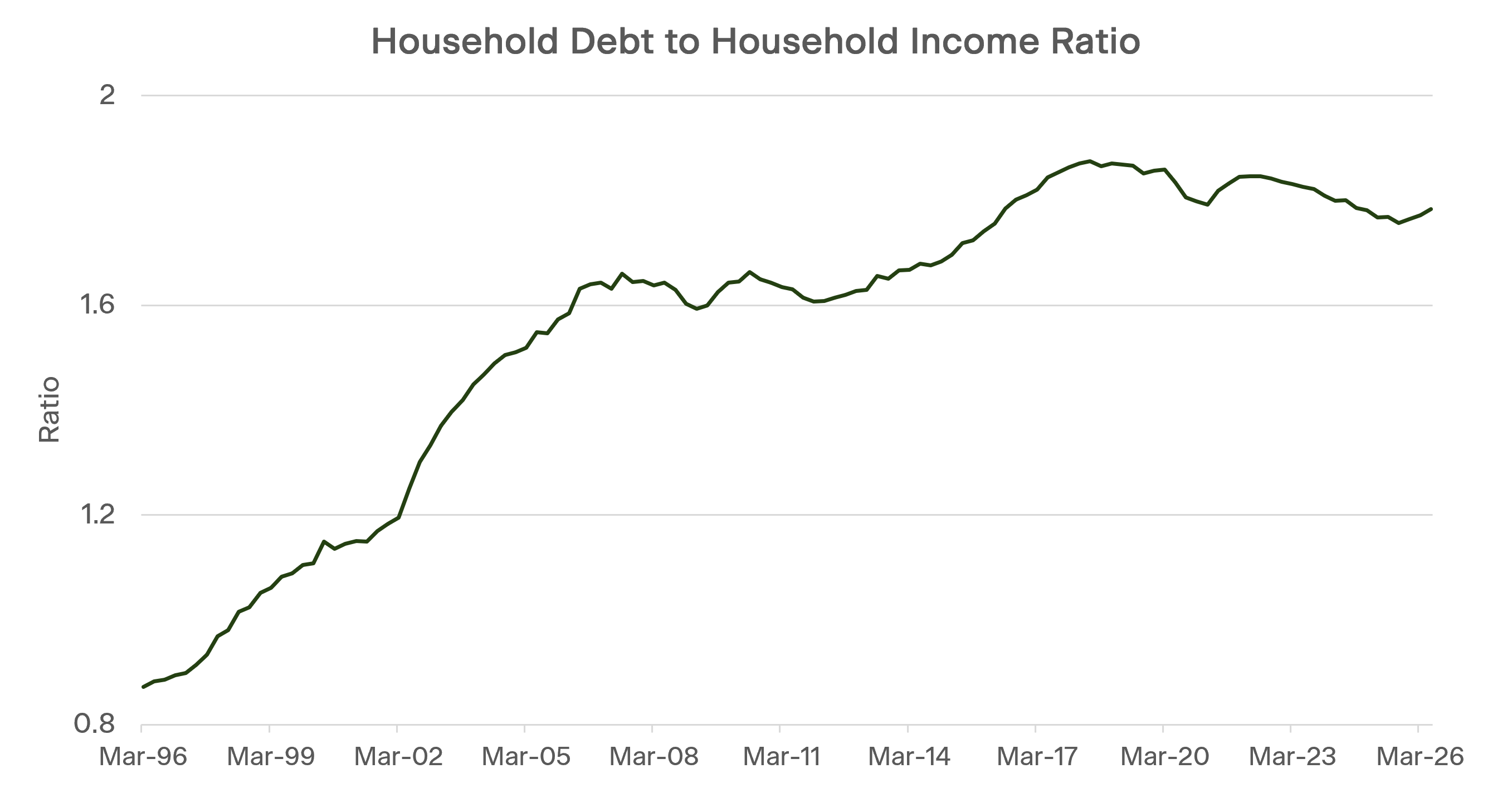
There is a lot of net wealth in the system and Australians haven’t been spending their recent gains. You can see the same dynamic in the ratio of household debt to disposable income. This surprised me. Over the past decade, Australians have reduced the ratio of indebtedness, not increased it.
Source: RBA
*Household disposable income is after tax, before the deduction of interest payments, and includes income of unincorporated enterprises
The net savings rate is at historically high levels (excluding Covid). In short, the Australian consumer has already cut back on spending and is surprisingly well placed to navigate a fall in house prices (maybe this is all less surprising to anyone trying to run a retail business in Australia over the past few years). It’s already tough, is it going to get worse?
Australia’s fiscal position is the envy of many
On the fiscal side, before concluding that Australia’s fiscal position is a reason to take money elsewhere, it is worth looking at the alternatives. With the possible exception of the Reserve Bank Governor Michelle Bullock, I’m as frustrated as anyone with our government’s profligacy and the lack of credible political alternatives.
The simple fact is Australia remains in a much stronger position than many large developed economies. International Monetary Fund (IMF) estimates put Australian gross government debt at around 51% of GDP, compared with roughly 102% in the UK, 119% in France and 126% in the US. The gap in annual deficits is also substantial. Australia’s general government deficit (including federal, state and local governments) is expected to be around 2% of GDP in 2027, versus about 3% in the UK, close to 5% in France and more than 7% in the US. The cost of servicing the US’s ballooning debt obligations now exceeds defence spending and represents almost 20% of federal government tax receipts.
If there is a government debt crisis coming, Australia is one of the better placed countries to make the required adjustments. Maybe a crisis overseas is the wake-up call we need.
The market is not the economy
Finally, the ASX is not the economy. A significant number of ASX-listed companies, including miners and large swathes of the technology and healthcare sectors, earn more of their revenues overseas than they do from Australia. As discussed above, that might not prove to be a good thing. But it’s not difficult to express a negative view on the local economy without abandoning the ASX.
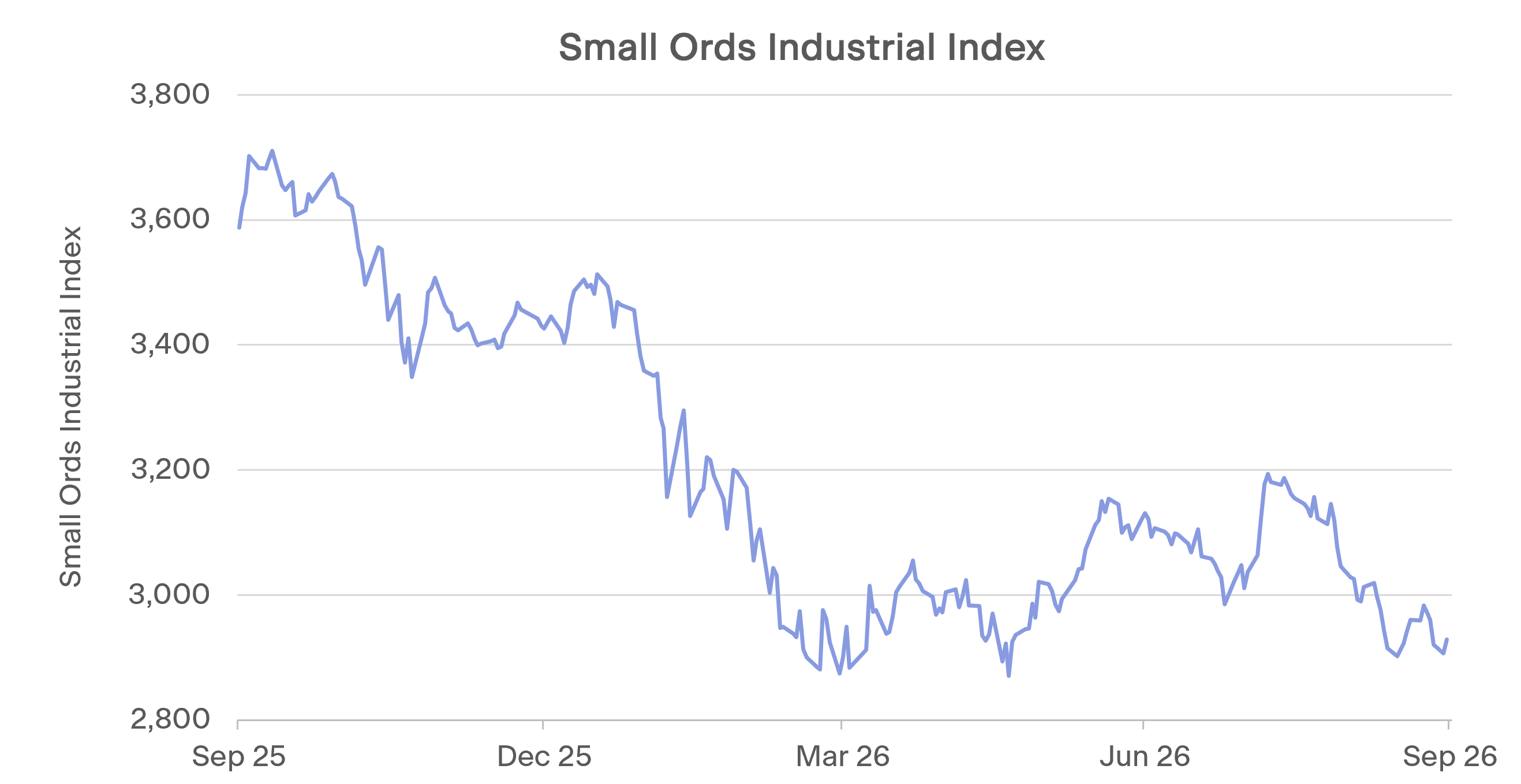
That is exactly what many investors have been doing for most of 2026. Retail bellwether JB Hi-Fi’s share price has fallen 27% this calendar year. The Small Ordinaries Industrials index - a collection of smaller Australian non-mining companies - has fallen 18% over the past 12 months. Those companies most exposed to the Australian consumer have already seen their share prices hammered.
The Forager Australian Shares Fund spends most of its time well away from the largest companies in the ASX 200. Our focus is on smaller businesses that are unloved, underappreciated, unpopular or overlooked. And today the price-to-earnings ratio of the ASX Small Ordinaries Index (including the miners) sits at an average of around 12 times earnings, versus about 16 times for the large-cap dominated ASX 200. There is a significant valuation gap between many smaller companies and the businesses dominating the headline indices.
Source: Bloomberg
None of this amounts to a forecast that Australia will sail through the next few years without difficulty. It is simply a reminder that a weak consumer, falling house prices or slower economic growth do not automatically add up to an investment thesis that says “avoid the ASX”.
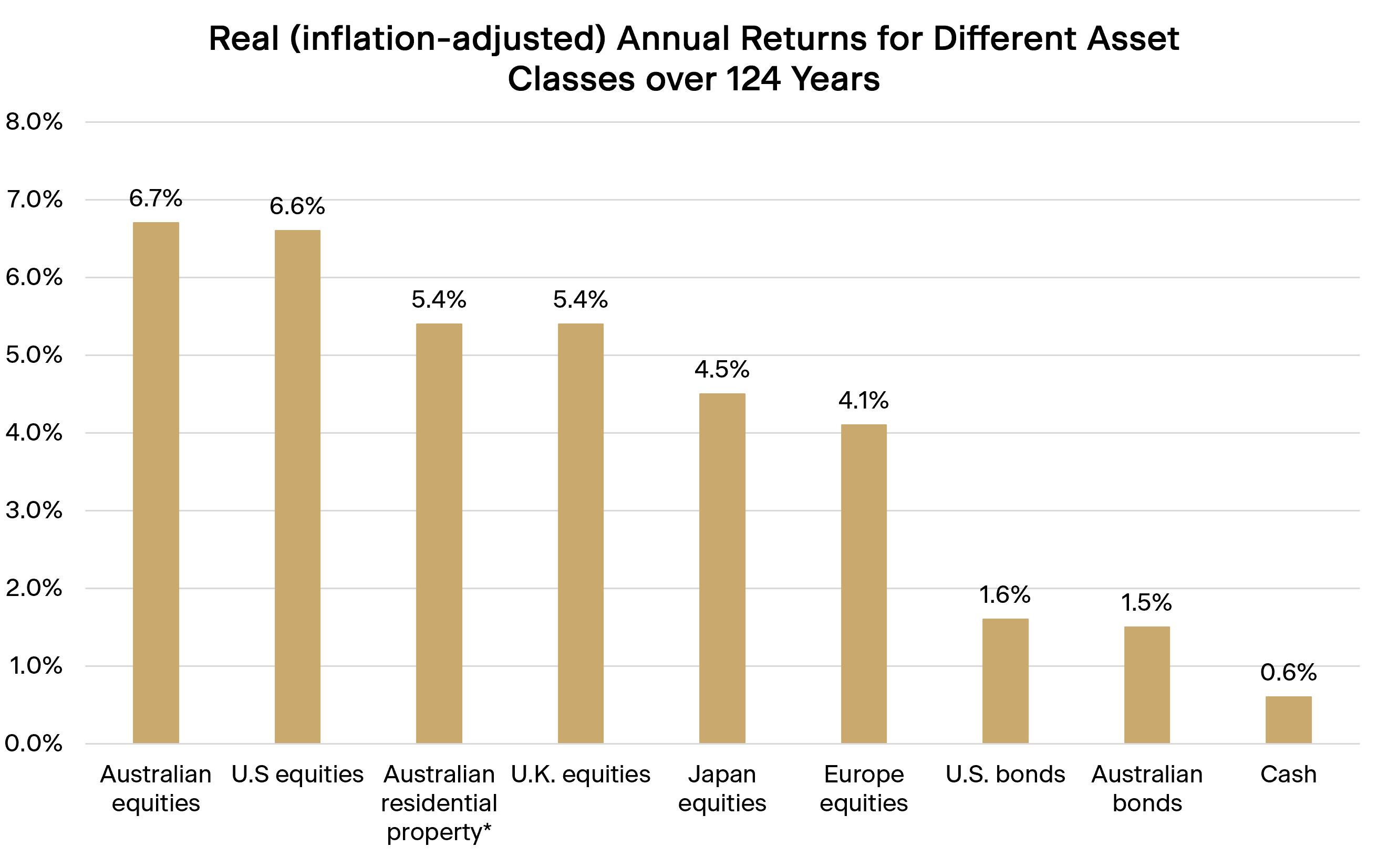
Source: UBS Global Investment Returns Yearbook 2025. Geometric mean return between 1900-2024
*Source:CoreLogic Australia. 30 year returns to 2022. Real US T-Bill Returns used as aproxy for cash
International diversification has been a welcome trend over the past decade but we are lucky to have the home market that we do. Thanks to a stable democracy, a relatively well educated population and a lot of resources that the rest of the world needs, it has been one of the best performing global markets over the past 120 years. It should be a core component of most local investors’ asset allocation plans and I wouldn’t change that because of the scary headlines you read in the paper today. In fact, if I were providing general advice to a US-based client, I might suggest a little market on the other side of the Pacific that could be a sensible place to park a small percentage of their portfolio.